
Search
Category
Related Industries
- NBS Releases Mid-October 2026 Price Changes for Key Production MaterialsExplore reported NBS mid-October 2026 production material price changes and what mixed trends mean for procurement. Review key data limits before updating supplier quotes and cost assumptions.
- How LOPA hazard analysis assesses runaway risk in hydrogenationLOPA hazard analysis reveals hydrogenation runaway risks. Learn how reaction data, independent safeguards, and response times help validate protection and uncover safety gaps.
- Tsinghua Team Converts Methanol Selectively to Formaldehyde, Co-Producing Green HydrogenMethanol-to-formaldehyde conversion by Tsinghua researchers co-produces hydrogen under mild conditions. Explore the catalyst advance and evidence needed to assess green hydrogen claims.
Weekly Insights
Stay ahead with our curated technology reports delivered every Monday.
Power Plant EPC Support: Handover Documents for Equipment Reliability




Handover Records Are Part of the Reliability System
A power plant can receive equipment that has passed factory inspection, arrived without visible damage, and been installed according to drawings, yet still enter service with avoidable reliability risks. The gap often appears at handover. Missing test records, unclear material traceability, incomplete preservation instructions, or unresolved punch-list items can turn a technically sound package into a difficult asset to operate and maintain.
For quality-control and safety-management teams, handover documentation is not simply a contractual closeout requirement. It is the evidence trail that connects design intent, manufacturing controls, transport conditions, site installation, commissioning results, and future maintenance decisions. When records are fragmented or late, the owner may be unable to confirm whether a deviation was accepted, whether a pressure boundary was tested under the required conditions, or whether an instrument loop was calibrated before energization.
In an EPC environment, these records become more complicated because responsibility passes through several parties: equipment manufacturers, package integrators, engineering teams, civil contractors, erection contractors, commissioning specialists, and the owner’s operating organization. A reliable handover process must make those interfaces visible rather than assuming that each party’s files will align automatically.
Why Documentation Failures Become Equipment Failures
Most documentation defects do not immediately stop a turbine, pump, boiler auxiliary, transformer, or control system from operating. Their effect emerges later, often during an upset, inspection, repair, warranty discussion, or modification. At that point, an undocumented condition can delay diagnosis and create a safety exposure.
Consider a rotating equipment package. If the final alignment report is unavailable, maintenance personnel may not know the reference condition established during installation. When vibration increases after several months of operation, they have less basis for distinguishing thermal movement, pipe strain, foundation settlement, bearing wear, or an original installation issue. A similar problem occurs when lubrication specifications are contained only in a vendor manual that never reached the maintenance system. The wrong oil grade or filtration practice may then be selected during routine servicing.
For pressure-containing systems, incomplete records carry a different type of risk. Material certificates, weld maps, welding procedure qualifications, non-destructive examination reports, hydrostatic or pneumatic test records, and pressure-relief valve settings form a chain of evidence. If a line is modified or repaired later, the owner needs to know the original design limits, material grade, joint locations, and prior inspection status. Without that history, decisions may rely on assumptions that are not appropriate for temperature, corrosion, pressure cycling, or fluid-service conditions.
Electrical and control systems present equally important concerns. A cable schedule that does not reflect site changes, an incomplete termination record, or missing calibration certificates can complicate fault finding and isolation. In safety-related circuits, document accuracy supports the ability to verify cause-and-effect logic, trip settings, alarm priorities, interlocks, and bypass controls. The document package must describe the equipment that was actually installed, not only the equipment shown in an early design issue.
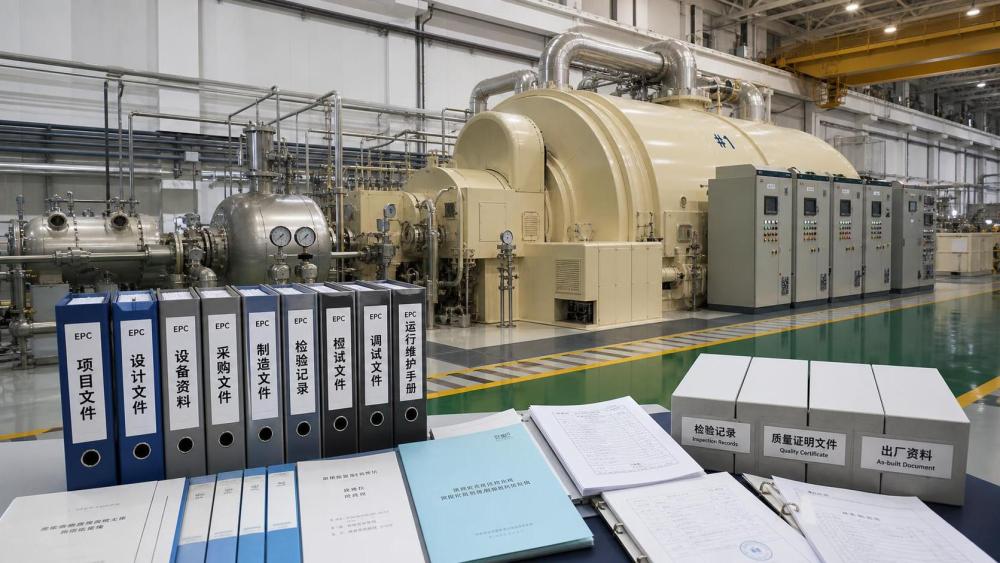
What a Handover Dossier Should Establish
A useful dossier does more than collect documents by discipline. It allows a reviewer to answer several practical questions: What was supplied? Was it manufactured and tested to the approved basis? What changed? Was it installed and commissioned in an acceptable condition? What limits, maintenance actions, and safety precautions apply during service?
The exact file structure depends on the plant scope and contract requirements, but a mature handover package usually addresses the following evidence areas.
The distinction between “submitted” and “accepted” matters. A document may exist in a transmittal register but still contain unresolved comments, incorrect tag references, missing signatures, or an obsolete revision. Quality personnel should track status at the individual document level, especially for records linked to statutory inspection, pressure integrity, electrical safety, machinery protection, or environmental controls.
Standards, Certificates, and the Limits of Paper Compliance
Certification-oriented reviews can become overly document-driven. A certificate is valuable only when its scope, identification, and applicability match the supplied equipment. For example, a material certificate must be traceable to the relevant heat, component, or manufacturing lot according to the project’s traceability requirements. A calibration certificate should identify the instrument, range, date, standard used, and status at the time of calibration. A test certificate must state the actual test conditions rather than merely confirm that a test occurred.
Quality teams should also distinguish between third-party certification, manufacturer declarations, inspection reports, and internal check sheets. These records have different evidentiary roles. Treating them as interchangeable can conceal a gap in the required verification route. The purchase order, project specification, approved quality plan, and applicable code requirements should define which activities require witness points, hold points, independent inspection, or formal release.
Document control should preserve this hierarchy. A scanned certificate with an unreadable heat number may satisfy a filing target but fails as traceability evidence. A signed checklist without tag numbers may not prove that a specific instrument was tested. An approved deviation may allow a change, but it should also identify any revised operating limit, monitoring requirement, or maintenance consequence created by that change.
Configuration Management Cannot End at Mechanical Completion
Mechanical completion often creates pressure to close files quickly. Yet late design changes are common during construction and commissioning. Field routing changes, substituted instruments, revised cable terminations, modified supports, altered valve orientations, and updated control logic may all be reasonable, but they must be captured before operations take responsibility.
As-built records should be based on controlled changes, not informal site knowledge. Where red-line drawings are used, ownership for review, incorporation, and final approval needs to be explicit. A red line that remains in a contractor’s marked-up print set is not a dependable operating document. The final drawing should also be checked against equipment tags, field labels, and the plant’s asset-management hierarchy.
For larger equipment packages, the interface between supplier documentation and EPC records deserves special attention. Package documentation may include proprietary manuals, certified drawings, performance data, and commissioning procedures, while the EPC contractor maintains plant-level drawings and integration records. Effective power plant EPC support helps organize these interfaces so that package evidence can be connected to the wider plant configuration, commissioning sequence, and owner documentation system.
Critical Checks for Quality and Safety Teams
A practical review is usually more effective when it follows equipment criticality rather than reviewing every file with the same intensity. Equipment whose failure can cause personnel injury, loss of containment, fire, prolonged outage, or loss of protective function should receive deeper record verification. This may include high-energy piping, boilers and pressure vessels, steam turbines, generators, transformers, fuel systems, emergency power equipment, fire-protection systems, and shutdown instrumentation.
For each critical item, reviewers can build a concise verification matrix that links the asset tag to mandatory evidence. The matrix should identify the required document, revision, supplier or contractor source, acceptance status, outstanding comments, and storage location. It should not become a substitute for technical review; its purpose is to make omissions visible before handover.
- Confirm tag consistency. Equipment tags, serial numbers, line numbers, cable identifiers, and drawing references should match across certificates, test records, manuals, and the final asset register.
- Review deviations as operating information. A concession or nonconformance disposition may affect inspection intervals, allowable loading, corrosion allowance, spare-parts compatibility, or future repair methods.
- Check preservation history. Long storage periods can affect bearings, seals, electrical insulation, desiccant condition, coatings, and internal cleanliness. The record should show what was done and whether reinspection was required before commissioning.
- Verify test boundaries. Pressure tests, flushing, electrical tests, and functional tests must identify the actual system boundary and any excluded components. A passed test does not automatically cover equipment isolated during the test.
- Close safety-related punch items carefully. Temporary bypasses, incomplete guards, missing labels, access limitations, or outstanding alarm logic changes should not disappear into a general punch-list summary.
Common Handover Weaknesses and Their Consequences
One recurring weakness is the “manual dump”: hundreds of supplier files are transferred without a searchable index, clear equipment association, or revision control. The owner technically receives the information but cannot efficiently use it during a maintenance event. A better approach is to index records by plant area, system, equipment tag, and document type, while retaining the manufacturer’s original document numbering where useful.
Another weakness is relying on factory acceptance testing as proof of site readiness. Factory tests can confirm specified functions under controlled conditions, but site installation introduces cable routing, field wiring, grounding, process connections, support loads, environmental exposure, and integration with other systems. Site acceptance evidence is needed to show that the delivered equipment performs correctly within the installed plant arrangement.
Incomplete turnover of temporary works and commissioning changes also creates risk. Temporary strainers, jumpers, blanking plates, bypass lines, test instruments, and altered setpoints should be recorded and either removed or formally controlled. If a temporary modification is not identified, operating personnel may assume a system is in its intended permanent state.
Warranty records deserve similar discipline. The start date, notification process, exclusions, preservation obligations, and required operating records may affect whether a future claim can be evaluated. This is particularly relevant where equipment is delivered well before commissioning or where commissioning is staged. The contractual issue should be managed separately from technical acceptance, but both rely on accurate dates and records.
Building a More Defensible Handover Process
Reliable handover begins before manufacturing is complete. The document register should be established during procurement, with document requirements tied to the approved inspection and test plan, supplier data requirements, and equipment criticality. Waiting until the final weeks of commissioning usually produces rushed review, duplicate requests, and unresolved records.
Quality teams can improve control by setting interim document milestones: approved drawings before fabrication, manufacturing records before shipment, preservation instructions at delivery, installation records before energization, and final as-built documents before transfer to operations. These milestones make document quality part of the execution process rather than a closing activity.
Safety managers should participate where records define safe operating boundaries or protective functions. Their review is particularly relevant for lockout and isolation information, hazardous-area documentation where applicable, relief-device settings, safety-instrumented functions, emergency procedures, lifting and access constraints, and chemical or fuel handling instructions. A document package may be complete in volume while still failing to give operators the information needed to control hazards safely.
The strongest handover dossiers are usable under pressure. They make it possible to identify the installed component, understand its approved condition, locate the relevant test evidence, recognize changes from the original design, and apply the correct maintenance or safety instruction. That standard of usability gives quality and safety teams a practical basis for accepting equipment into service rather than merely accepting a stack of files.