Search
Category
Related Industries
- What drives heat exchanger technology cost in new process projects?Heat exchanger technology cost depends on duty, materials, pressure, fouling, and installation. Learn how to control project budgets, reduce risk, and compare bids smarter.
- How bearing preload affects turbine reliability in aerospace systemsAerospace bearings for turbines: discover how precise preload control improves rotor stability, reduces skidding and heat, and supports reliable aerospace turbine performance.
- When carbon capture integration services reduce project delivery riskCarbon capture integration services reduce delivery risk by aligning utilities, tie-ins, controls, permitting, and CO2 transport for reliable industrial project execution.
Weekly Insights
Stay ahead with our curated technology reports delivered every Monday.
Aromatics Processing Bottlenecks to Watch




Aromatics Processing Bottlenecks to Watch
As global petrochemical chains face tighter margins, decarbonization pressure, and rising feedstock complexity, aromatics processing is entering a critical phase of operational and strategic reassessment. For researchers and industry observers, understanding the bottlenecks shaping efficiency, catalyst performance, separation intensity, and system integration is essential to tracking where future competitiveness in modern chemical processing will be won or lost.
In the current aromatics processing landscape, small changes in feed quality, heat balance, and recycle purity can shift plant economics sharply. That is why bottleneck analysis is no longer a narrow engineering task. It is a cross-functional judgment on throughput, utility cost, emissions exposure, and the ability of integrated units to sustain stable output under changing market conditions.
Why Aromatics Processing Needs a Scene-Based Check
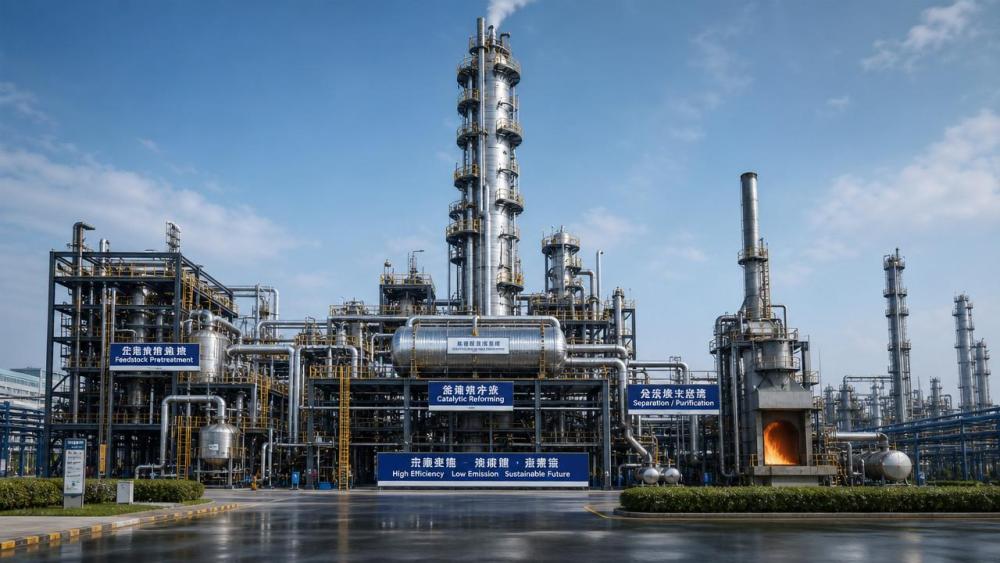
Aromatics processing does not fail in one single place. It usually weakens across multiple operating scenes: feed pre-treatment, catalytic reforming, extraction, fractionation, and recycle management. Each scene creates different constraints, and each constraint affects the next unit in line.
This is why aromatics processing bottlenecks should be judged by operating context, not by design name alone. A stable reformer with poor separation will still underperform. A strong extraction section with unstable feed composition will still produce uneven product quality.
Where the Main Bottlenecks Usually Appear
1. Feed Variability at the Front End
The first bottleneck in aromatics processing is often feed instability. Naphtha range shifts, sulfur traces, and paraffin balance changes can reduce reforming selectivity and raise downstream separation load.
When feed quality drifts, the plant may still run, but aromatics yield becomes harder to predict. In practice, that means more recycle stress, larger energy demand, and tighter catalyst life control.
2. Heat Integration and Furnace Efficiency
Aromatics processing is highly sensitive to heat transfer performance. Poor furnace efficiency or weak heat recovery can increase operating cost quickly and reduce flexibility during load changes.
This scene matters especially when utility prices are volatile. If heat exchangers are fouled or recycle preheating is not optimized, the whole aromatics processing chain absorbs the penalty.
3. Catalyst Deactivation and Selectivity Loss
Catalyst performance is a decisive bottleneck in aromatics processing. Activity decline, coke formation, and metal contamination can reduce conversion quality while increasing regeneration frequency.
The key signal is not only throughput loss. It is the gradual rise in impurity carryover and product variability, which often appears before obvious shutdown risk.
4. Separation Intensity and Column Loading
Separation is one of the most energy-intensive scenes in aromatics processing. Distillation and extraction units can become the limiting factor when close-boiling components increase or recycle purity weakens.
High column loading, unstable reflux control, and solvent inefficiency can all compress margins. In many plants, the separation section becomes the hidden ceiling on overall plant capacity.
Different Scenes Demand Different Judgments
How to Match Bottlenecks with Practical Responses
- Strengthen front-end feed monitoring to reduce aromatics processing volatility.
- Review heat exchanger fouling and furnace duty balance before expanding capacity.
- Track catalyst life by selectivity trend, not only by operating days.
- Optimize solvent cycle and reflux logic to lower separation energy demand.
- Link unit-level alarms to plant-wide energy and emissions indicators.
Aromatics processing improves fastest when decisions are tied to measurable scenes. If the issue is feed instability, the answer is control and pre-treatment. If the issue is separation ceiling, the answer is thermal integration and column rebalancing. If the issue is catalyst decline, the answer is lifecycle management and impurity control.
Common Misjudgments That Hide the Real Constraint
One frequent mistake is blaming product loss on a single reactor when the real limit sits in upstream feed quality. Another is assuming capacity can be raised by more heat alone, while the actual bottleneck is column hydraulics or solvent recovery.
A third oversight is ignoring how emissions compliance changes operating choices. In aromatics processing, energy efficiency and carbon intensity now shape the same decision tree as yield and purity. Plants that miss this connection often face avoidable cost escalation.
What to Do Next
For a stronger aromatics processing outlook, start with a scene-by-scene bottleneck map. Connect feed behavior, catalyst status, heat integration, and separation loading in one operating view. Then rank the constraints by cost impact and stability risk.
That approach makes aromatics processing easier to optimize, easier to decarbonize, and easier to align with long-term competitiveness. In a tighter market, the winning plants will not be the ones that run hardest, but the ones that see the bottleneck earliest.