




For executives evaluating low-carbon chemical investments, renewable propylene production plant cost depends on feedstock contracts, integration opportunities, product yields, and the scope of investment.
Bio-propane dehydrogenation generally offers a more direct route to propylene. Biomethanol conversion offers feedstock flexibility and coproduct revenue, but requires a broader commercial strategy.
Neither pathway has an automatic cost advantage. Delivered feedstock prices, achievable operating rates, and credible customer premiums can outweigh differences in process equipment costs.
This CS-Pulse analysis compares the investment boundaries, operating economics, and commercial risks that determine which route deserves further engineering and which assumptions require verification.
Which Route Fits Your Business Model?
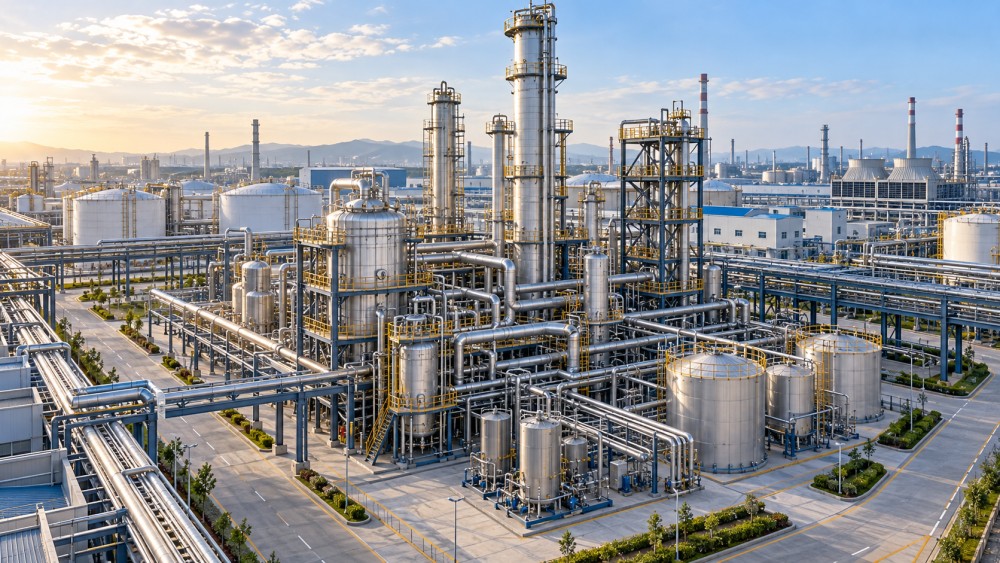
Bio-propane dehydrogenation, or renewable PDH, converts renewable propane into propylene and hydrogen. Its appeal is strongest where propylene demand and existing infrastructure already align.
Biomethanol-to-olefins converts renewable methanol into a mixture of light olefins. Conventional MTO produces substantial ethylene alongside propylene, making coproduct placement central to profitability.
Propylene-oriented methanol technologies can change this product balance. Executives should compare the specific licensed configuration, since generic MTO assumptions can misrepresent a proposed project.
For an existing PDH operator, renewable feedstock substitution may require less incremental investment than constructing a new conversion complex, provided feed quality meets specifications.
For a chemical cluster with reliable biomethanol supply and demand for multiple olefins, methanol conversion may justify greater complexity through shared infrastructure and product flexibility.
The initial decision therefore concerns business configuration: a focused propylene asset, a mixed-olefins platform, or renewable feedstock integration into an existing production system.
Define the Plant Boundary Before Comparing Capital Costs
A renewable propylene production plant cost comparison becomes misleading when one estimate includes renewable feedstock manufacturing while another begins with purchased feedstock at the gate.
For renewable PDH, define whether the investment covers only propane conversion or also upstream renewable fuel production, propane recovery, storage, utilities, and export facilities.
For biomethanol conversion, distinguish purchased biomethanol from integrated production using biomass gasification. These configurations have materially different financing needs, construction schedules, and operating risks.
Renewable hydrogen combined with captured carbon dioxide represents an e-methanol pathway. Its electricity exposure should be assessed separately rather than silently included within biomethanol economics.
Within the conversion plant, both routes require feed preparation, reaction equipment, product recovery, utilities, controls, and facilities capable of meeting the selected product specification.
Methanol conversion additionally requires management of reaction water and a separation system suited to its olefin mixture. Renewable PDH requires hydrogen separation and propane recycle.
Request total installed cost, owner’s costs, contingency, working capital, and construction financing separately. Battery-limits equipment estimates alone cannot establish the funding requirement for investment approval.
Feedstock Consumption Usually Determines the Operating Cost Ranking
Stoichiometry provides a useful starting point. Producing one tonne of propylene theoretically consumes approximately 1.048 tonnes of propane and generates about 0.048 tonnes of hydrogen.
Actual purchased propane consumption is higher because selectivity is imperfect and material can leave through purge streams, fuel use, or other process losses during operation.
Do not confuse single-pass conversion with overall feed consumption. Recycling unconverted propane improves overall utilization, although it increases circulation duties and associated equipment requirements.
For methanol, the theoretical requirement is approximately 2.284 tonnes per tonne of propylene if all methanol carbon becomes propylene. Commercial mixed-olefin production requires different accounting.
Actual methanol consumption per tonne of propylene depends heavily on product distribution. Ethylene and other saleable products consume feedstock carbon but also generate revenue.
Compare routes using net feedstock cost after credible coproduct credits, then add utilities, catalysts, maintenance, staffing, waste handling, and other site operating expenses consistently.
Bio-propane availability deserves particular scrutiny because supply often depends on upstream renewable fuel operations. A propylene project cannot assume that production expands independently of those markets.
Biomethanol procurement requires similar discipline: verify operating capacity, delivery infrastructure, sustainability documentation, competing demand, and contractual remedies when suppliers fail to deliver agreed volumes.
What an Illustrative Cost Comparison Actually Shows
The following example demonstrates the calculation method using deliberately hypothetical inputs. These figures are neither market quotations nor engineering estimates for a specific commercial project.
Both cases purchase certified renewable feedstock and produce polymer-grade propylene. Upstream feedstock manufacturing, taxes, subsidies, and any renewable product premium are excluded from this illustration.
The methanol case assumes 0.80 tonnes of saleable ethylene per tonne of propylene, earning a net realization of $800 per tonne after applicable selling costs.
Its feed consumption and coproduct yield must be validated together through a licensor’s material balance. They cannot be independently selected to improve the apparent economics.
Renewable PDH cash production cost equals 1.15 × $900 + $250 − $40, giving $1,245 per tonne of propylene before capital recovery and taxes.
The biomethanol case equals 4.50 × $400 + $350 − $640, giving $1,510 per tonne. Its lower feedstock price does not offset higher consumption.
Applying an illustrative 12% annual capital charge adds approximately $173 per tonne for PDH and $267 for methanol conversion at 450,000 tonnes of annual production.
The resulting screening costs are approximately $1,420 and $1,780 per tonne, respectively. These conditional results illustrate a method; they do not establish universal route rankings.
Which Variables Could Reverse the Investment Decision?
Feedstock sensitivity should be presented directly to the investment committee. Under the illustrative assumptions, each $100-per-tonne propane increase adds $115 per tonne of propylene.
A $100-per-tonne methanol increase adds $450 per tonne of propylene. This greater exposure makes reliable methanol procurement especially important for the selected product slate.
Conversely, each $100-per-tonne increase in net ethylene realization reduces the methanol case’s propylene cost by $80, assuming the same coproduct yield and sales volume.
Holding other assumptions constant, methanol would need to cost approximately $320 per tonne for the illustrated cases to reach similar costs, including annual capital recovery.
That threshold changes with propane prices, yields, capital requirements, and ethylene realizations. A two-dimensional feedstock price sensitivity is more useful than a single break-even number.
Utilization also matters because fixed costs and capital charges continue during outages. Feedstock shortages can therefore damage economics even when contracted feed prices appear attractive.
Stress-test simultaneous adverse conditions: expensive feedstock, weak coproduct prices, slower commissioning, and reduced operating rates. Correlated downside often determines whether financing remains viable through downturns.
Energy Integration and Carbon Value Require Separate Evidence
PDH is strongly endothermic, making heat supply, furnace performance, and heat recovery central to operating economics. Renewable feedstock alone does not eliminate combustion emissions.
Methanol conversion is exothermic, but the overall plant still requires energy for feed conditioning, compression, separation, and water management. Reactor heat release does not imply energy independence.
Evaluate recoverable heat against actual site demand, temperature levels, operating schedules, and exchanger constraints. A theoretical heat surplus has limited value without a usable destination.
For hydrogen coproducts, establish purity, pressure, recovery cost, and a dependable buyer or internal consumer. Gross hydrogen production should never be credited at an unsupported premium.
Carbon performance requires a lifecycle assessment covering feedstock origin, upstream processing, transport, utilities, allocation rules, and the product boundary required by the intended customer or regulation.
Keep carbon compliance savings, subsidies, and customer premiums as separate model lines. Eligibility, duration, verification requirements, and contractual ownership can differ across jurisdictions and customers.
A technically renewable product may earn little premium without accepted certification and traceability. Confirm whether physical segregation or an approved mass-balance system satisfies buyer requirements.
What Must Be Proven Before Approving the Project?
Technical maturity should be assessed at the configuration level. Commercial experience with conventional feedstocks does not automatically validate every renewable feed impurity profile or integration scheme.
Ask licensors for guaranteed consumption, product quality, catalyst performance, utility demand, and operating availability. Ensure guarantees apply to the proposed feedstock specification and operating envelope.
Secure feedstock agreements covering sufficient volume, quality, delivery reliability, and price exposure. Evaluate whether suppliers have operating assets or depend on projects still awaiting financing.
Match product commitments to the planned slate. A methanol project requires credible ethylene placement as well as propylene demand, particularly where pipeline access is limited.
For brownfield opportunities, quantify tie-in costs, outage requirements, shared utility capacity, and lost production during construction. Existing infrastructure creates value only when capacity is available.
Advance to investment approval when feedstock contracts, licensor guarantees, infrastructure access, and customer commitments support the same financial case under a credible downside scenario.
Choose the Route Your Contracts and Infrastructure Can Support
Renewable PDH is particularly compelling when dependable bio-propane supply meets existing propylene infrastructure. Biomethanol conversion becomes stronger when competitive feedstock and coproduct markets align.
The decisive metric is risk-adjusted delivered propylene cost supported by verifiable contracts and engineering. Compare identical boundaries, challenge coproduct credits, and test performance through market downturns.
For executives, the best investment combines competitive conversion economics with dependable supply and bankable demand. Renewable credentials create commercial value when customers recognize and pay for them.